Directions
A Foundational Theory of Planetary Homeostasis and Gaia Engineering
John Harrison
October 2026
Abstract
We live in a closed system analogous to a rather large closed terrarium or an operating spaceship (Boulding, 1966; Fuller, 1969), and have to understand the limitations.

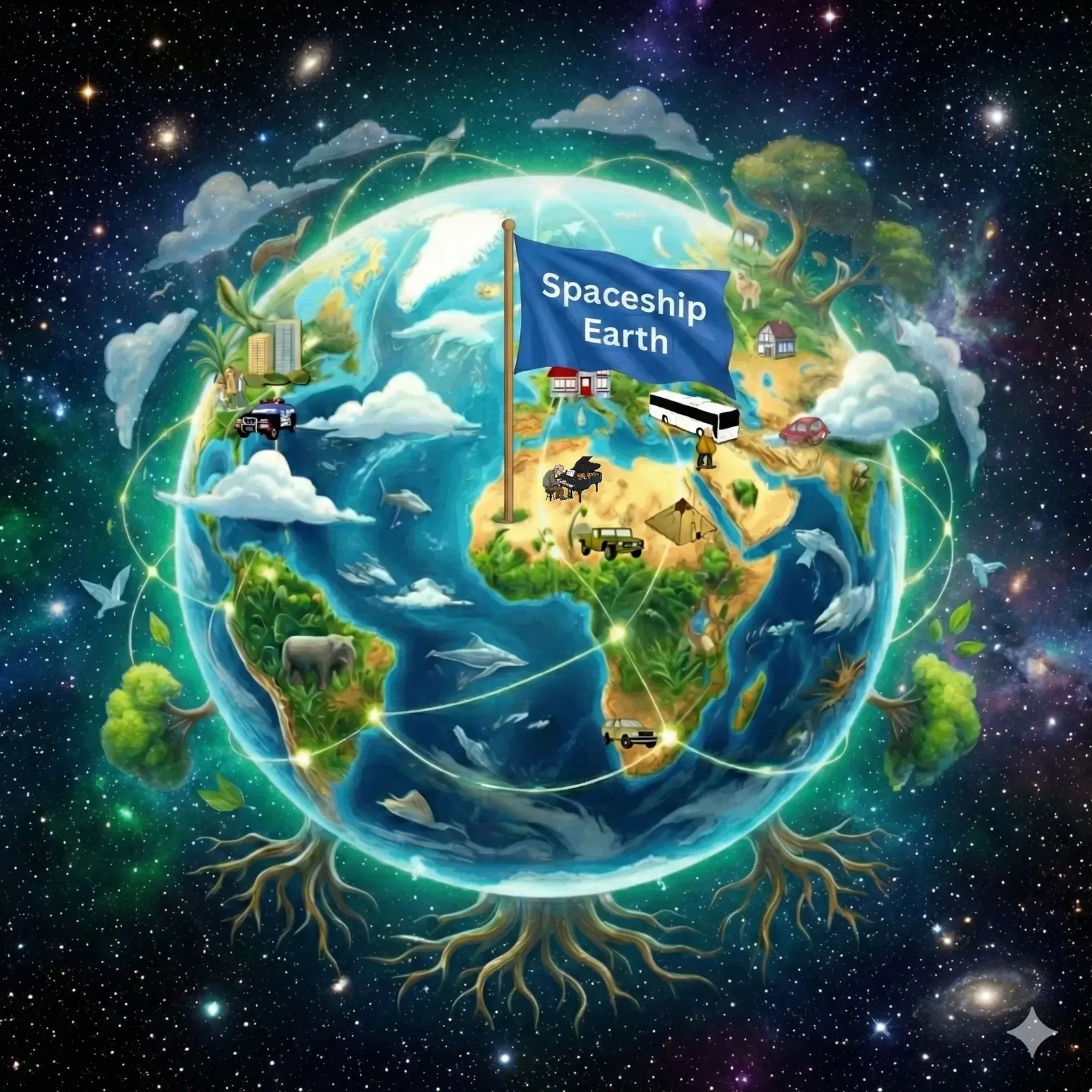
I have detailed the scope of our planetary overshoot extensively, particularly in this “Directions” paper and the “Solutions” paper as well as other Gaia Engineering papers.
Humanity has crossed a decisive threshold. The combined mass, velocity, and thermodynamic throughput of the Anthroposphere (encompassing the Technosphere) now rival and disrupt Earth’s fundamental biogeochemical engines: the Atmosphere, Hydrosphere, Cryosphere, Geosphere, and the biological networks of the Eco-Sphere.
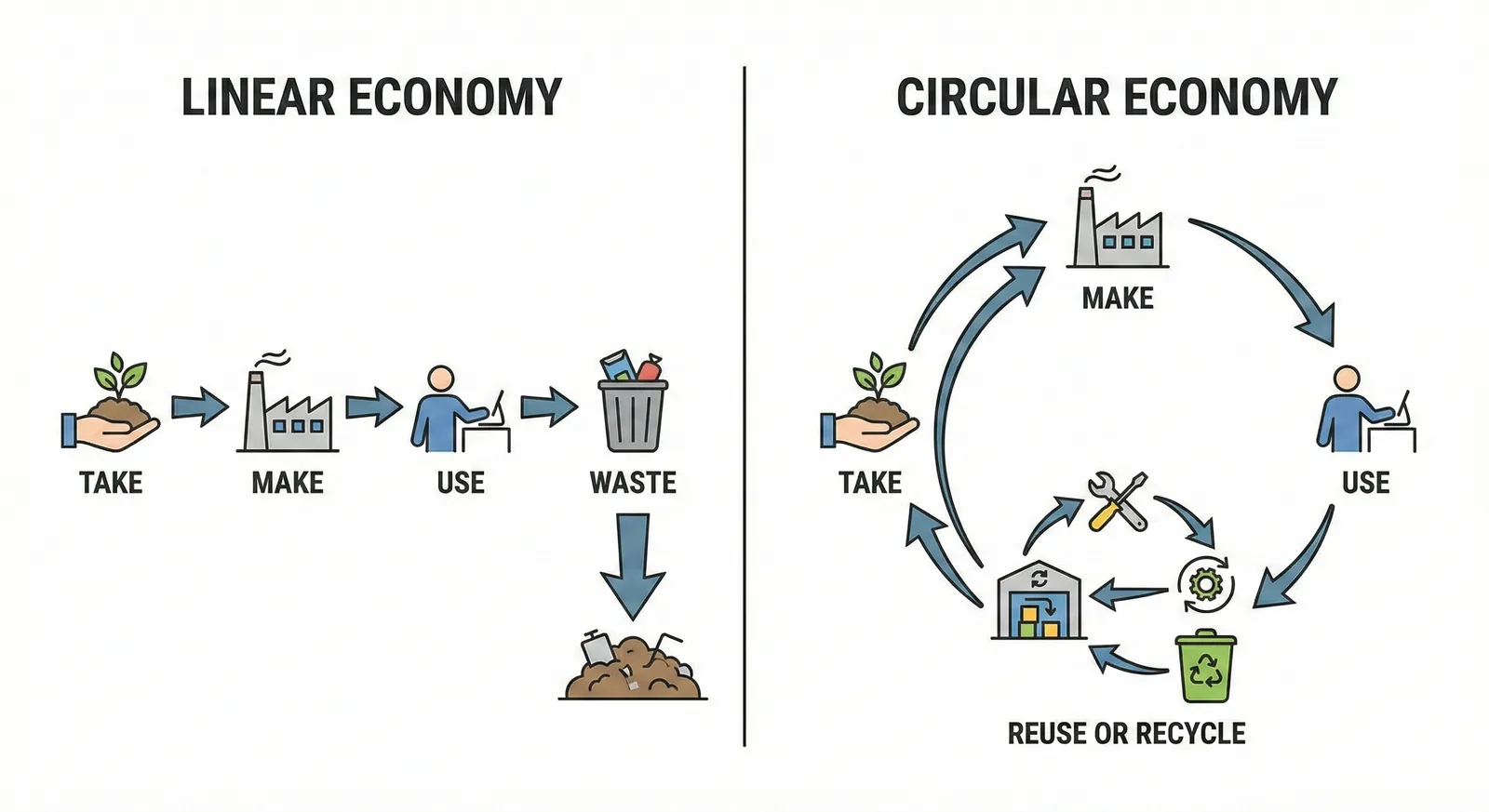
Climate breakdown, soil desertification, novel persistent chemical contamination, and critical resource exhaustion are routinely treated as isolated crises managed by fragmented, disparate disciplines. They are not independent failures; they are localised symptoms of an uncoordinated, incompatible linear techno-process. Humanity has deployed open-loop industrial throughput systems based on linear extractive logic inside an Eco-Sphere structured on circular, regenerative biogeochemical feedback loops. We must achieve compatibility because if one studies the accelerating trajectories of global breakdown there is no other option.
Gaia Engineering proposes the structural, harmonious integration of the Anthroposphere with the Ecosphere. A rigorous scientific, industrial, and economic framework is required to resolve what is currently an existential contradiction. Uniting the biogeochemical insights of Vladimir Vernadsky, Gaia Theory, and modern Earth System Science with frontier materials engineering, driven electrochemistry, and artificial intelligence, Gaia Engineering redefines human enterprise. Its objective is to transform the industrial techno-process from an extractive parasite into a constructive, deliberate metabolic co-processor compatible with the Ecosphere, as outlined in the companion paper, “The Four Sciences.”
1. The Great Transition: From Inhabitant to Planetary Architect
For the first 3.8 billion years of terrestrial life, biological evolution adapted to planetary boundary conditions. Organisms occupied evolutionary niches, modulated their immediate surroundings, and gradually shaped the chemistry of the crust, oceans, and atmosphere.
Today, the planet is violently being forced to adapt to humanity. This trajectory is physically unsustainable. We must achieve molecular compatibility with the Eco-Sphere with unprecedented speed. The Industrial Revolution unleashed exponential flows of matter and energy. Human civilisation annually mobilises more rock, sediment, synthetic compounds, and reactive chemical elements than all natural volcanic, fluvial, and tectonic processes combined. We move mountains of rock to extract a ton of nickel or gold. Humanity is no longer merely an ecological participant; as Vladimir Vernadsky anticipated, human civilisation has become an active, conscious biogeochemical force.
The Anthroposphere encompassing the Technosphere, Sociosphere, Politisphere, and Econosphere has become the dominant geological driver on Earth, continuously drawing massive, low-entropy material inputs from abiotic and biotic spheres and discharging high-entropy, toxic waste back into them.
Yet our governance, economics, and engineering philosophies remain trapped in an obsolete 19th-century paradigm of infinite planetary sinks and limitless frontiers. The collision between an exponential technosphere and finite planetary carrying capacity has introduced structural systemic instability. The task before us is neither passive environmental preservation nor neo-primitive industrial retreat. It is a civilisational upgrade that deploys our full scientific and technical capability to build a closed-loop techno-process compatible with the Earth system.
2. From Vernadsky’s Noosphere to Gaia Engineering
The intellectual heritage of Gaia Engineering rests on the shoulders of foundational thinkers who recognised the systemic reality of the living Earth:
- Vladimir Vernadsky’s Biogeochemistry and the Noosphere: Vernadsky established that living matter is the primary geological sculptor of Earth’s crust and surface chemistry. He foresaw the transition of the biosphere into the Noosphere a state where human cognition and scientific reason become the chief regulatory mechanism of planetary evolution.
- Lovelock and Margulis’ Gaia Theory: Demonstrated that the Earth acts as a complex, self-organising homeostatic system in which living biota and their physical environment actively regulate planetary temperature, ocean salinity, and atmospheric composition within survivable bounds.
- The Industrial Ecology of Hawken, McDonough, Braungart, and Stahel: Advanced the principles of "waste equals food" and the performance economy, distinguishing biological nutrients from technical nutrients.
- Kenneth Boulding’s Spaceship Earth: Foresaw the necessary transition from an open "cowboy economy" of reckless throughput to a closed "spaceman economy" where the Earth is treated as a single cyclical vessel with zero unallocated outputs (Boulding, 1966).
- Moleconomics: The foundational science of tracking atomic forms, flows, and balances within and across spheres.
- Modern Earth System Science: Quantitative monitoring of planetary boundaries, thermodynamic flows, and geochemical interconnections demonstrates that current human throughput is overwhelming natural homeostatic damping mechanisms.
If a keystone species pushes planetary feedback loops beyond critical tipping points, the system re-establishes equilibrium under boundary conditions that are hostile to that species. Gaia Engineering seeks to embed the Anthroposphere directly inside the self-balancing feedback loops of the Ecosphere. Achieving this requires strict theoretical and applied adherence to the Four Sciences.
3. The Strict Separation of Sciences: Map, Filter, and Tools
To avoid the systemic paralysis and conceptual confusion that plague contemporary sustainability initiatives, we must strictly delineate the science of tracking from the ecological doctrine of belonging and the physical tools of transformation. Blurring these lines leads to unscientific policy and industrial failure.
Moleconomics: The Science of the Ledger (The Map)
Moleconomics is strictly the empirical map. Originally defined as "the study of the form of atoms in molecules, their flow, interactions, balances, stocks, and positions" (Harrison, 2001–2006), it serves as the planetary accounting ledger. It does not pass moral judgement; it measures physical reality. Under a moleconomic lens, contemporary ecological breakdown is not an abstract issue of "pollution," but a precise mass-balance failure: the wrong molecules in the wrong concentrations in the wrong places:
- The Atmosphere: An excess of greenhouse gas molecules (CO2, CH4, N2O) trapping infrared radiation faster than planetary systems can radiate heat into space.
- The Hydrosphere: Excessive reactive nutrient molecules (reactive N and P) inducing widespread aquatic hypoxia and marine dead zones.
- The Biosphere: Persistent, non-biodegradable synthetic molecules (PFAS, microplastics, halogenated hydrocarbons) bioaccumulating across food webs.
- The Lithosphere: Massive dissipation of concentrated, low-entropy elemental stocks (copper, lithium, rare earths, phosphorus) into dilute, unrecoverable waste sinks.
Compatibilisation: The Science of Belonging (The Filter)
While Moleconomics provides the map, Compatibilisation provides the filter. It is the applied ecological science that determines which molecular forms, concentrations, and reaction products are compatible with specific Earth spheres.
Compatibilisation recognises that a molecule's impact is entirely dictated by its location and form, it’s moleconomics. Carbon structured as cellulose in a forest canopy or humus in topsoil is fertile and life-sustaining; that same carbon oxidised into excess atmospheric CO2 drives catastrophic climatic heating. Because the linear techno-process inevitably leaks (through friction, abrasion, product loss, and operator abandonment), Compatibilisation enforces a Two-Tier Material Doctrine:
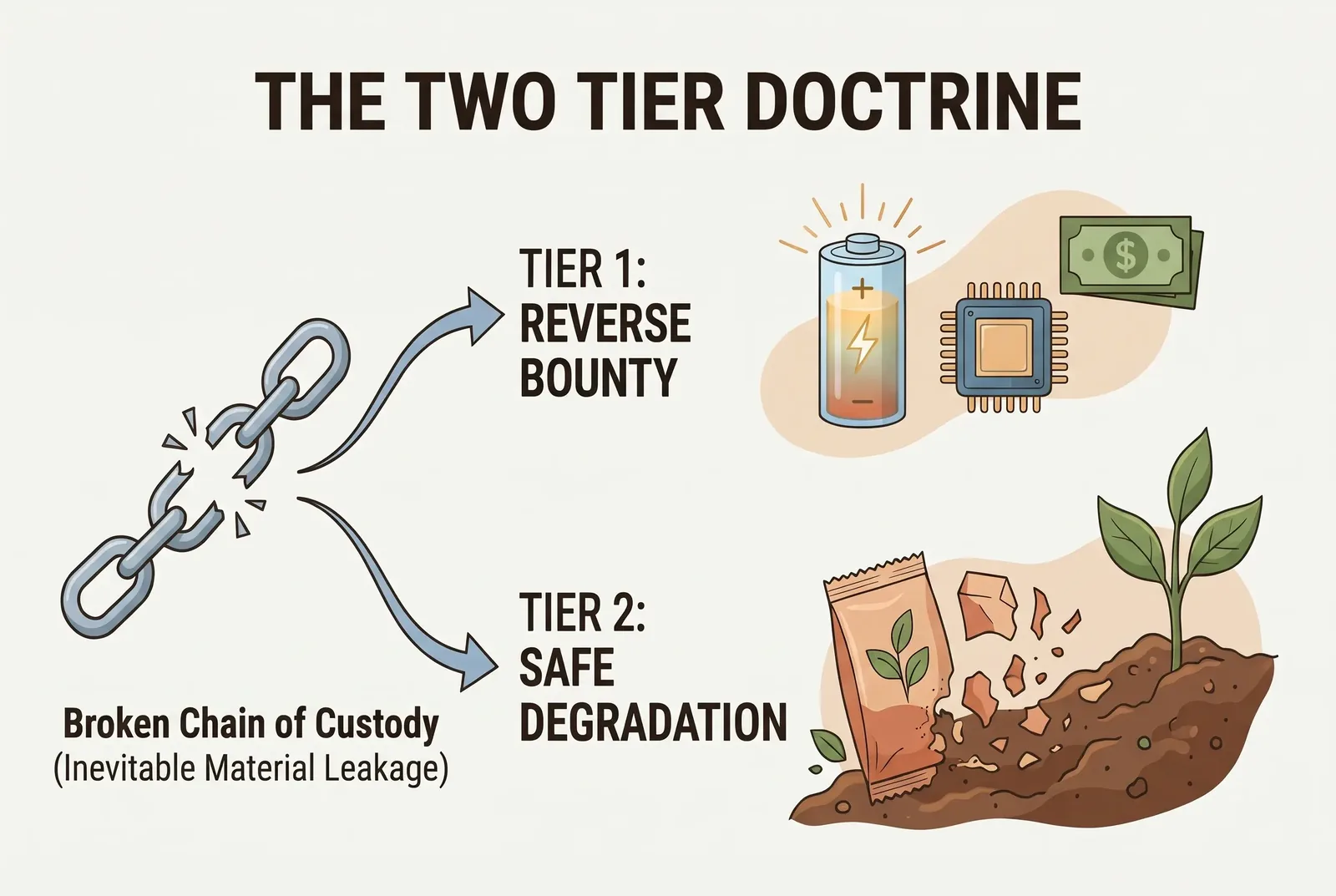
Tier 1 (Sealed Industrial Nutrients): Toxic, high-bond-energy, or critical elements (rare earths, lithium, copper, specialised fluoropolymers) must be legally and physically confined to closed, trackable industrial loops. They are leased through Product-as-a-Service frameworks and recovered through high-value reverse bounties within an automated "Scavenger Economy."
Tier 2 (Dispersive Nutrients): Any material subject to environmental abrasion or open dispersal (tyres, shoe soles, packaging films, lubricants, agricultural mulches) must be chemically benign by design. When leakage occurs, these compounds must passively hydrolyse or biodegrade into non-toxic biological nutrients without persistent environmental residence.
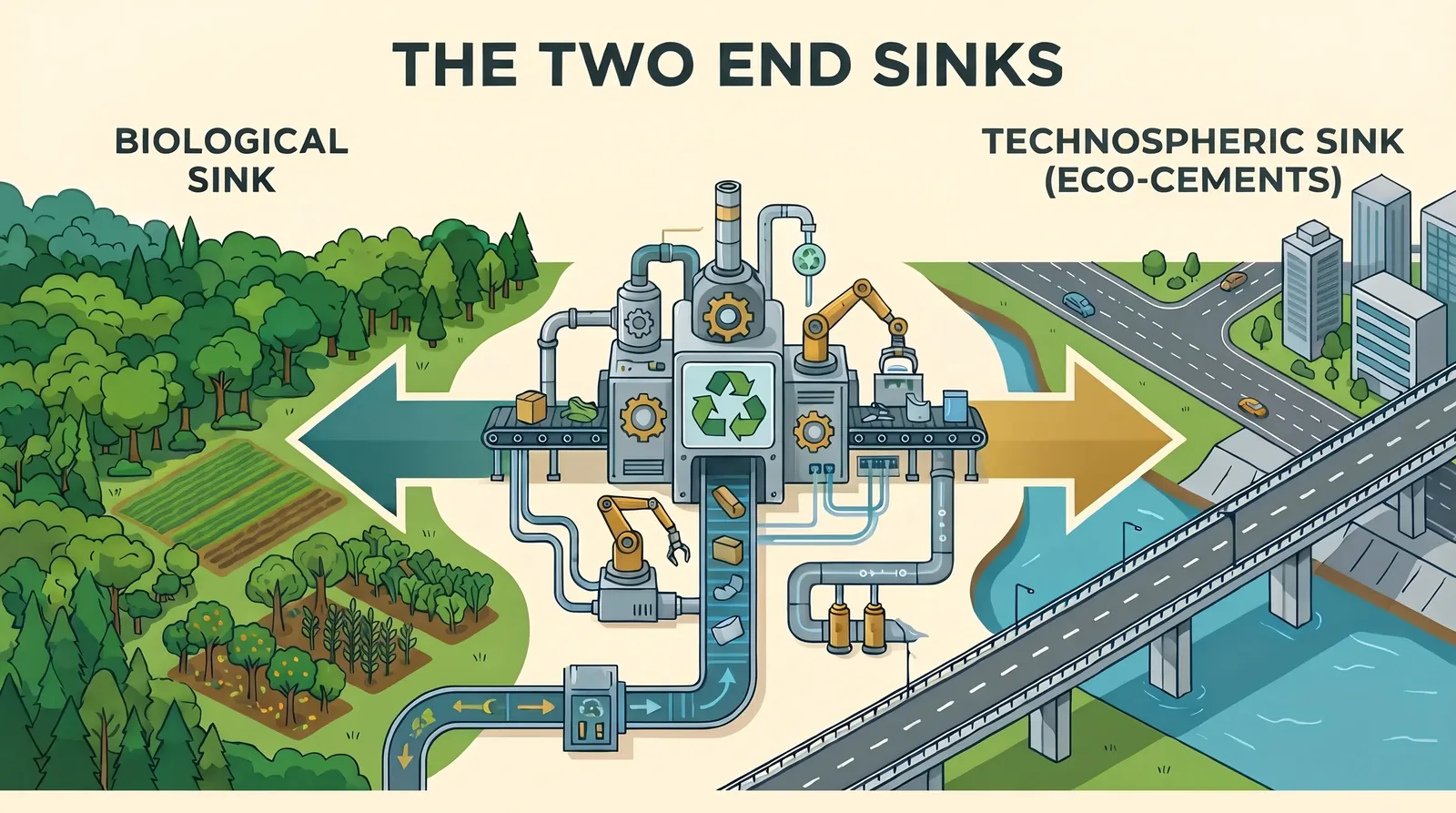
When degraded materials can no longer cycle within the Technosphere, Compatibilisation dictates their bifurcation into two distinct sinks:
- The Biological Sink: High-surface-area organic carbon, nitrogen, and phosphate streams returned to rebuild depleted topsoils and accelerate forest biomass draw-down.
- The Technospheric Sink: Incompatible, non-recyclable, or contaminated mineral/silicate residues permanently locked into non-leaching, thermodynamically stable stone (Calcium & Magnesium Eco-Cements) for civil infrastructure.
Molecular Restructuring: The Thermodynamic Engine (The Tools)
When Moleconomics maps an incompatible stock of molecules, and Compatibilisation dictates their containment or neutralisation, humanity requires physical tools to execute the transformation. The linear economy is fundamentally an entropy generator (ΔS; Georgescu-Roegen, 1971), extracting organised matter and dissipating it as high-entropy waste. To reverse this without generating secondary emissions, Gaia Engineering deploys a precise toolkit:
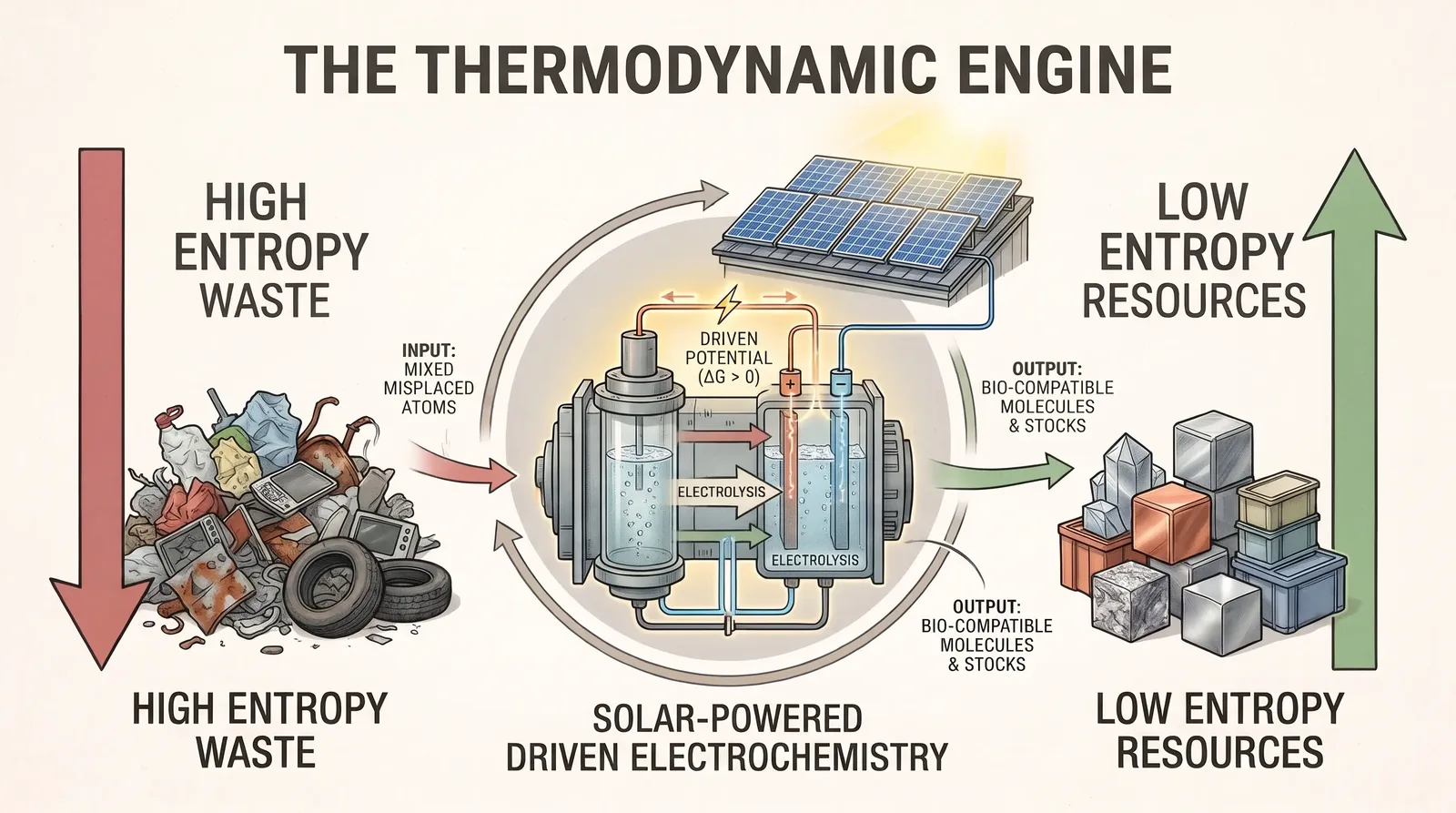
1. Driven Electrochemistry (The Bond Cleaver): The core metabolic organ of the new platform. Powered by abundant, ultra-low-cost renewable electricity, driven electrochemistry applies external potentials to force non-spontaneous, endergonic reactions (ΔG > 0) forward at room temperature and pressure. By injecting electrons directly into anti-bonding orbitals, it cleanly cleaves recalcitrant bonds (C–F in PFAS, C–Cl in toxics, robust polymer backbones) and electrowins high-purity metals from mine tailings and brines without pyrometallurgical smelting.
2. Hyperspectral AI & Robotic Demanufacturing (The Sorter): Computer vision, hyperspectral near-infrared (NIR) sensors, and robotic demanufacturing systems identify embedded chemical barcodes and digital product passports. AI directs non-destructive disassembly (such as selective solder melting and debond-on-demand adhesives) to preserve embodied structural exergy before resorting to chemical down-shifting.
3. Bio-Metallurgical & Enzymatic Dismantling (The Catalysts): Targeted microbial leaching (e.g., Acidithiobacillus) and AI-engineered enzymes that depolymerise complex synthetic textiles and extract trace elements at mild, biological temperatures.
4. Carbon-Mineralisation Matrices (The Lithospheric Sinks): Reactions that capture CO2 and permanently fix it into stable mineral carbonates. Engineered carbonation pathways convert captured carbon and industrial mineral by-products into non-leaching, thermodynamically stable artificial rock for civil infrastructure, locking away gigatons of carbon permanently in the lithosphere.
4. Aligning Financial Capital with Physical Reality
Conventional economics operates on a dangerous fiction: that value can be decoupled from physical reality. Financial ledgers measure paper claims on capital, treating natural resources as free inputs and ecological sinks as uncosted dumping grounds. In the real world, natural capital is finite and rapidly degrading.
- Wealth is Matter and Exergy: Real wealth consists of organised matter structured by useful energy (exergy) to provide human utility. Financial currencies are merely derivative claims on underlying thermodynamic capacity.
- True-Cost Mass-Balance Accounting: Every industrial enterprise must account for every kilogram of matter entering and exiting its operational boundary. An unallocated output is not an "externality"; it is an acute failure of chemical accounting.
- The Dissipation Penalty: The destruction of physical wealth is measured by thermodynamic dissipation: dispersing organised, refined molecular stocks into diffuse, unusable states foreign to Earth's biogeochemical cycles.
- Shift from Throughput to Circulation: Sustainable enterprise does not maximise the linear velocity of molecular extraction and abandonment. It maximises the service and utility delivered per molecule retained within circulation.
By substituting physical molecular mass balances for distorted financial metrics, Gaia Engineering converts ecological restoration from an altruistic moral cost into an imperative for corporate balance-sheet solvency and profitability.
5. Advanced Technology and the Techno-process
The techno-process describes the industrial mechanism by which humanity takes matter from the planet, manufactures functional materials, uses them, and disposes of the residue. Our current open-loop techno-process clashes violently with natural cycles. Closing this loop requires deploying our advanced technological platform:
- The Renewable-Electrochemical Tipping Point: With renewable electricity trending toward zero marginal cost during peak daytime generation, Driven Electrochemistry reaches an operational tipping point. The operational expenditure (OpEx) of electrochemically disassembling waste molecules drops below the capital-intensive cost of virgin mining and fossil-fuelled synthesis. Secondary resource recovery becomes an exercise in pure profit arbitrage.
- Infrastructure as the Primary Geological Sink: Civil engineering represents the largest material throughput on Earth (~30 billion tonnes annually). By converting industrial flue gases, desalination reject brines, and silicate slags into carbonated mineral matrices, the built environment becomes the planet’s largest carbon sink, locking away gigatons of carbon in permanent stone.
- Artificial Intelligence as System Nervous System: Managing dynamic global molecular flows exceeds human analytical bandwidth. AI serves as the nervous system of Gaia Engineering, continuously optimising supply chains, predicting material life cycles, and managing automated drop-vault networks at retail hubs.
6. The Global Race to Regenerate
The 19th and 20th centuries were defined by a global race to extract: who could clear forests, strip mines, pump hydrocarbons, and emit waste with the greatest speed and lowest unit cost. Gaia Engineering initiates ‘The Global Race to Regenerate.’
This is not a retreat into ascetic austerity; it is an industrial crusade. Rather than fighting markets, Gaia Engineering redefines market victory conditions. Corporations will compete to mine landfills, industrial effluents, and atmospheric emissions because these constitute higher-grade, geographically proximate reserves than depleted virgin ores. Construction giants will compete to erect carbon-negative infrastructure because permanent mineralisation certificates and superior material performance will undercut legacy Portland cement. When ecological restoration is aligned with thermodynamic efficiency and raw profit, circularity becomes self-accelerating.
7. The S-Curve Adoption of the Civilisational Transition
Systemic civilisational transformation does not occur along a slow, linear trajectory. When foundational technologies cross price parity, societal adoption follows an accelerated S-Curve:
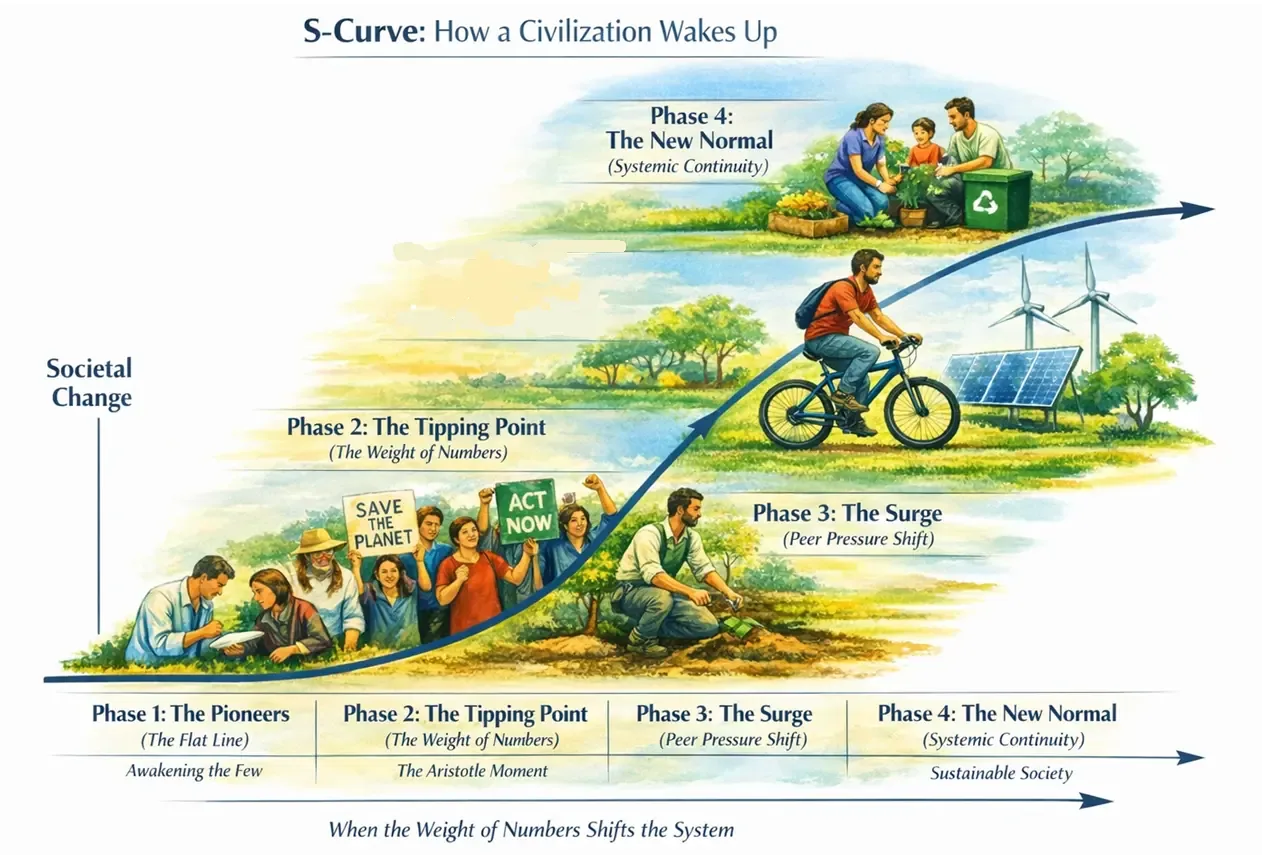
- Phase 1: The Pioneers (Awakening the Few): Researchers, independent innovators, and early adopters develop Moleconomic accounting protocols, prove carbon-mineralisation pathways, and build driven electrochemical prototypes. Societal change appears slow, but the intellectual and experimental foundation is solidified.
- Phase 2: The Tipping Point (The Aristotle Threshold): A critical threshold (10% to 25% institutional adoption) is reached. Driven electrochemistry achieves parity with virgin extraction; carbon border taxes penalize unbuffered dissipation; and reverse-bounty collection hubs scale across retail car parks and EV dwell nodes.
- Phase 3: The Surge (Rapid Scaling): Self-reinforcing economic feedback loops take hold. Institutional capital divests from linear extraction and rushes into secondary molecular harvesting. Peer norms and corporate competition enforce 100% molecular custody.
- Phase 4: The New Normal (Planetary Homeostasis): Closed-loop compatibilisation becomes the default industrial standard. The Technosphere ceases to be a geological parasite and functions as an active, homeostatic metabolic organ of the Earth system.
8. Synthesis: The Coupled Destiny of Anthroposphere and Ecosphere
The Anthroposphere is not an alien cancer imposed upon the planet; it is an emergent evolutionary property of the Biosphere. Technology is an outgrowth of human biology, neural architecture, and social tool-making capacity.
The fatalistic narrative that modern civilisation must inevitably cannibalise the living world is both scientifically and imaginatively bankrupt. Humanity now possesses the computational power, electrochemical tools, and thermodynamic knowledge to deploy an industrial metabolism of equal elegance and scale to Earth's natural cycles. By transforming waste from an uncosted liability into an indispensable feedstock, we reconcile human prosperity with planetary survival.
9. The Choice Before Us
The geological stratum currently forming across the Earth's crust will forever bear the physical signature of our civilisation.
If we remain locked in linear extraction, that layer will be a thin, chaotic boundary of microplastic residue, radioactive fallout, ash, and toxic heavy metals, the tragic signature of a species whose technological reach exceeded its thermodynamic wisdom.
Gaia Engineering offers the alternative. It allows that stratum to be the solid foundation of a lasting geological era: a stratum of permanent, carbon-sequestering stone, restored soils, clean water cycles, and stabilised atmospheric balances. The science is defined. The engineering pathways are proven. The economic drivers are aligning. The work begins now, as articulated across “The Four Sciences.”
References
Boulding, K.E. (1966). The Economics of the Coming Spaceship Earth. In H. Jarrett (Ed.), Environmental Quality in a Growing Economy. Baltimore: Resources for the Future/Johns Hopkins University Press.
Georgescu-Roegen, N. (1971). The Entropy Law and the Economic Process. Cambridge, MA: Harvard University Press.
Harrison, J. (2001–2006). Gaia Engineering and Moleconomics. TecEco Pty. Ltd. Available at: https://www.tececo.com
Harrison, J. (2026). The Four Sciences: Compatibilisation, Molecular Restructuring, and the Market Mechanics of Survival. TecEco Pty Ltd.
Hawken, P. (1993). The Ecology of Commerce: A Declaration of Sustainability. New York: HarperCollins.
Lovelock, J.E. & Margulis, L. (1974). Atmospheric homeostasis by and for the biosphere: The Gaia hypothesis. Tellus, 26(1–2), 2–10.
Lovelock, J.E. (1979). Gaia: A New Look at Life on Earth. Oxford: Oxford University Press.
McDonough, W. & Braungart, M. (2002). Cradle to Cradle: Remaking the Way We Make Things. New York: North Point Press.
Stahel, W.R. (2010). The Performance Economy. 2nd ed. Basingstoke: Palgrave Macmillan.
Vernadsky, V.I. (1926/1998). The Biosphere. New York: Copernicus/Springer-Verlag.